Emetophobia is an intense and often debilitating fear of vomiting, whether it involves oneself or others. For those affected, everyday situations such as eating, socialising, travelling, or being around illness can trigger overwhelming anxiety and avoidance. Research suggests emetophobia affects between 3% and 9% of the population, with a higher prevalence among women. [1]
Am I making my partner’s emetophobia worse by reassuring them?
Reassurance itself does not cause emetophobia, but frequent or repeated reassurance can unintentionally maintain anxiety through what is known as the reassurance–relief cycle. When reassurance is given, anxiety often drops temporarily, which teaches the brain that relief only comes from certainty or reassurance. Over time, this can increase reliance on reassurance and make anxiety return more quickly. Support is most helpful when reassurance is balanced with empathy, calm responses, and encouragement of coping skills that help your partner tolerate uncertainty and build confidence.
Quick Help Summary
- Take their fear seriously (don’t minimise it)
- Avoid reassurance loops
- Respect food and social boundaries
- Encourage calm, not avoidance
- Get professional help when fear controls daily life

The Purpose of This Article
The purpose of this article is to offer practical advice on how to support someone with emetophobia. Living with this phobia is challenging, not just for the individual but also for those who want to help. By guiding you on how to listen, learn, and comfort, this article aims to provide the tools needed to be a supportive presence.
It’s crucial to educate yourself about emetophobia to offer meaningful support. By understanding the phobia, its triggers, and the anxiety it causes, you’ll be better equipped to help your loved one develop effective coping strategies. This article will guide you in providing the understanding and care that can make a real difference.
1. Taking Their Fear Seriously
When supporting someone with emetophobia, it’s crucial to acknowledge the reality of their fear. Avoid dismissive comments like “nobody likes vomit,” as this minimises their experience. Understand that emetophobia is not just a simple dislike but a serious anxiety disorder that can be overwhelming. Offer reassurance by validating their feelings and letting them know that you take their fear seriously. Respect their space when needed, but also be there for them, showing your willingness to support. Learn what you can about the phobia and its symptoms to better understand their experience and provide the compassionate support they need.
Offer Empathy and Support
Offer empathy and support by validating their feelings and acknowledging the challenges they face. Let them know that their fear is real and that you’re there to help them through it. Express your willingness to assist in any way you can, whether that’s by simply listening or by helping them find effective coping strategies. Your understanding and compassion can make a significant difference in their journey.
Interesting Study
2. Respect Their Boundaries
Respecting the boundaries of someone with emetophobia is essential for providing meaningful support. It’s important to understand their need for space, especially when they avoid certain social situations that might be overwhelming. Rather than throw dozens of questions at them, allow them to share their triggers and fears at their own pace. Pushing too hard can draw attention to the fear in a way that heightens their anxiety.
Instead, give them the time and space to observe their body and emotions, recognising when they feel comfortable enough to engage. By acknowledging that they may have triggers they aren’t ready to discuss, you show respect for their boundaries and create a safe environment for them to open up when they’re ready.
Balancing Your Own Boundaries
While supporting someone with any condition, it’s important to maintain a balance between respecting their boundaries and upholding your own. Being considerate of their needs doesn’t mean neglecting your own well-being. It’s essential to communicate openly about your limits, ensuring that you’re not overwhelmed while providing support. By setting clear boundaries, you can offer consistent help without compromising your own mental and emotional health. Afterall, you aren’t much use to anyone if your own mental health is compromised!

3. Help Them Develop Coping Skills
To effectively support someone with emetophobia, it’s crucial to help them learn various coping skills. Practical strategies can aid in calming down emetophobia by teaching them how to differentiate between nausea from anxiety and actual sickness. This distinction can reduce unnecessary panic and make their fear more manageable.
Encouraging them to face their fears in small, controlled ways can also be beneficial. In addition, consider tailored hypnotherapy sessions for emetophobia to these strategies. As a qualified hypnotherapist, I offer sessions that address the root causes of their anxiety, complementing their coping efforts with specialised support. Additionally, respect their quirks and understand that each person may have unique ways of coping. By combining these approaches, you can help them develop effective skills for managing their emetophobia and gain greater confidence in handling their anxiety.
If Still Unsure What to Do? Try This Tip!
One useful technique is Progressive Muscle Relaxation (PMR). A study on cancer patients undergoing chemotherapy found that PMR reduces physical tension, which helps lower the chances of vomiting [3].
To practice PMR, tense each muscle group for 5 seconds, then release for 10 seconds, starting from your toes and working up to your head. This method promotes relaxation, which can help manage the physical symptoms of anxiety.
4. Help Them Explore the Root Cause of Their Fear
Sometimes, people with emetophobia may not fully understand why they have this fear or what triggers it. While the fear of vomiting seems straightforward, deeper underlying issues often contribute to the anxiety. For example, the true fear might stem from the sensation of nausea, the loss of control, or the unpredictability of the experience.
One young woman shared her experience on Reddit, where she realised that her fear wasn’t about vomiting itself. Instead, it was the feeling of nausea and the uncertainty it brought. This insight was profound, but she struggled with how to use this information to manage her condition.
This confusion can make it harder for them to cope with their phobia and might frustrate those trying to support them. By understanding that their fear may have layers, you can offer more effective help. Pay attention to signs and triggers that might not be directly linked to vomiting, and encourage them to explore these deeper fears. This process of discovery can lead to better coping strategies and more meaningful progress.
5. Avoid Making Jokes About Their Fear
Respect a person’s fear, especially if they are children. Avoid making jokes or using words that might trigger anxiety. For example, pretend gagging noises or jokes about vomiting can make their fear worse. Instead, acknowledge their feelings and show understanding. When you validate their fear, you help create a safe and supportive space. This support can make them feel heard, respected, and less anxious.

A study on mental health stigma found that negative personal attitudes reduce the likelihood of seeking professional help by 20%. People who hold stigmatizing views toward others with mental health conditions are 18% less likely to seek help for themselves. Mockery or invalidation reinforces these negative attitudes. This reinforcement makes it harder for individuals to open up and seek the help they need [4].
Let’s not let our own entertainment discourage people from seeking the help they need.
6. Avoid Overprotecting or Coddling Them
While it’s natural to want to comfort a loved one with this condition, it’s important to refrain from excessive reassurance. Constantly providing reassurance can lead to dependency, making it harder for them to manage their anxiety independently. Encourage gradual exposure, if they are open to it. While it’s important to take it seriously and avoid dismissing their irrational fears, sheltering them excessively can reinforce their anxiety. Tough love may be necessary to gently guide them towards facing their fears rather than allowing addictive behaviour like seeking constant reassurance, which only offers temporary relief.
Instead of being overprotective, encourage an open discussion about their fears and coping mechanisms. This approach allows them to build resilience, and ensures that you are providing support without enabling their anxiety. The aim is not to withdraw support, but to avoid removing every source of discomfort. Gradually encouraging independence helps build confidence and resilience over time.
7. Listen and Communicate Openly
To support someone effectively, ask them directly how you can help. Open the conversation by showing genuine interest in their needs. Listen carefully, and learn about their symptoms to understand their challenges. Respect their comfort levels and recognise that discussing fears can be tough. Be sensitive to their boundaries, and let them share at their own pace. When you ask clear questions with kindness and respect, you create a safe space where they feel heard, valued, and supported.
You can use the Ask, Validate, Support (AVS) method to promote open and respectful communication. This approach is not an official therapy technique, but it relies on principles that therapists often use. Ask open-ended questions to invite honest conversations. Validate their emotions to show you understand their feelings. Offer support to help them feel safe and respected. This method helps individuals share their thoughts without feeling their boundaries are crossed.
- Ask: Initiate conversations by asking direct but gentle questions about their needs. For example, “How can I support you right now?” or “What makes you feel most comfortable in these situations?”
- Validate: Acknowledge their fears and feelings without judgment. Say things like, “I see this is really overwhelming for you now.”
- Support: Offer specific assistance based on what they express. Suggest practical help, such as “Would you like me to stay with you during this event?” or “Let’s try some breathing exercises if you feel anxious.”
If Still Unsure What to Do? Try This Tip!
Talk about their phobia when they are calm and relaxed. Choose a time when anxiety isn’t present. This helps them open up and engage more easily. A peaceful moment makes them feel safe and supported. They’ll be more comfortable sharing their thoughts, fears, and needs. By picking the right time, you create a space for meaningful conversation. This approach helps them feel understood and valued, making it easier to offer support.
Supporting a partner with emetophobia can be especially challenging because anxiety often shows up in shared routines such as meals, travel, intimacy, and social plans. Partners may worry about saying the wrong thing, enabling fear, or damaging the relationship. While the principles in this article apply to all forms of support, they become particularly important within close relationships where reassurance and accommodation can easily become habitual.and build confidence.
8. Emetophobia Symptoms: How to Recognise the Signs
Wondering if a loved one might have emetophobia?
Here are key symptoms to watch for:
- Wash hands frequently
- Avoidance of social engagements
- Reluctance to eat certain foods
- Excessive concern over hygiene
- Avoidance of situations where vomiting might occur
- Carrying anti-nausea medication or remedies at all times
- Expressing fear or anxiety about others being sick
- Avoiding public places like restaurants or theatres
- Refusing to travel or use public transportation
- Constantly seeking reassurance about health and hygiene
These behaviors show the severe anxiety and avoidance patterns linked to emetophobia. A survey of 50 women and 6 men (mean age: 31 years) reported major impacts on daily life. About 75% of respondents had eating rituals or limited the foods they ate. Nearly 50% of the women avoided or delayed pregnancy due to their fear. [5]
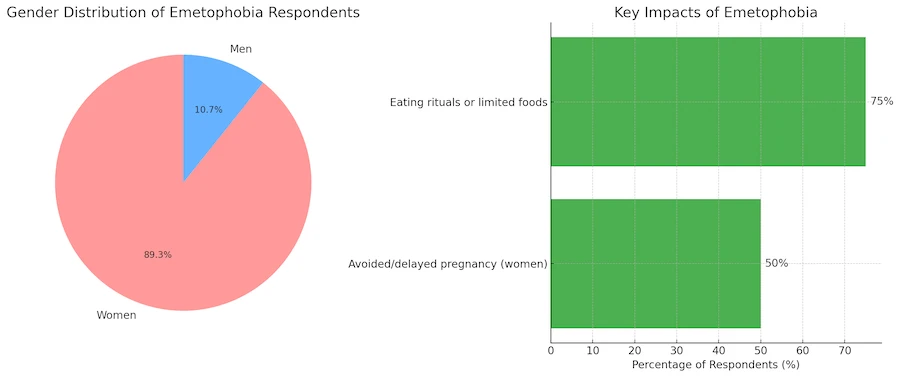
Respondents also experienced depression, panic attacks, social anxiety, compulsions, and a history of childhood separation anxiety. This condition caused problems in social life, marriages, and work. It also limited leisure activities.
Recognising these symptoms can help you offer empathy and support to those with emetophobia. Understanding the persistent and disruptive nature of this disorder is the first step to making sufferers feel heard and less alone.
References and Sources
Related Topics