
Table of Contents
The short answer to your question is yes, quitting smoking absolutely can cause sleep disturbances. But here’s what I want you to understand: this temporary disruption is a sign that your body is healing and recalibrating itself. Studies with treatment-seeking smokers reveal that sleep problems in the first week can predict relapse risk four weeks later [2], which is precisely why I always prepare my clients for this phase and equip them with the right tools to navigate it successfully.
The encouraging truth? Most people find that withdrawal symptoms, including sleep problems, disappear completely after two to four weeks. Your restful nights are coming – we just need to help you get there.
Why Does Quitting Smoking Cause Sleep Problems?
Let me explain what’s happening in your mind and body right now, because understanding this process will empower you to work with it rather than against it.
Think of nicotine as a master manipulator that has been orchestrating your brain’s chemical symphony for months or years. When you smoke regularly, your body becomes dependent on nicotine to regulate various functions, including your sleep-wake cycles. Your brain has rewired itself, adapting its natural chemical balance to accommodate regular nicotine input. Your internal clock, that beautiful, natural rhythm we call your circadian rhythm, has been influenced by when you typically smoke throughout the day.
Now that you’ve made the powerful decision to quit, your brain must readjust to producing sleep-regulating chemicals naturally, without nicotine’s artificial influence. This neurochemical rebalancing creates withdrawal symptoms, with sleep disruption being widespread. The cravings and restlessness you feel can be intense enough to wake you from sleep, leaving you alert and frustrated in the middle of the night.
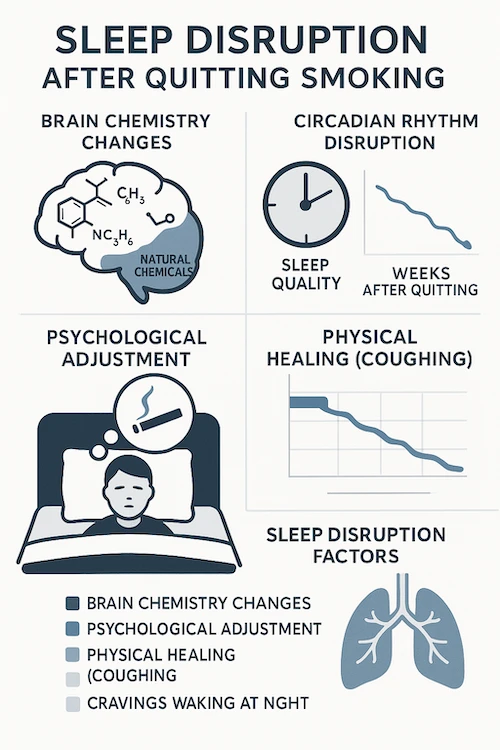
But there’s more to this story than just chemistry. Quitting smoking involves profound psychological adjustments that directly impact your sleep. Many of my clients have used cigarettes as their primary tool for managing stress, anxiety, or as a crucial part of their bedtime ritual. When we remove this familiar coping mechanism, it’s natural to feel unsettled at night – your mind is simply searching for its old comfort patterns.
Additionally, as your lungs begin their remarkable healing journey, you might experience increased coughing, especially at night. This is your respiratory system clearing itself of years of accumulated toxins – a beautiful process that can temporarily disrupt your sleep during those first several weeks.
Common Sleep Problems When Quitting Smoking
In my years of practice, I’ve observed four primary sleep challenges that people face when quitting smoking. Recognising these patterns can help normalise your experience and guide your response.
1. Difficulty Falling Asleep
This is by far the most frequent complaint I hear. Without nicotine’s influence on your brain chemistry, you might find your mind feels hyperactive or anxious when trying to transition into sleep. Your thoughts may race, cycling through worries or simply feeling restless without your usual smoking routine to signal bedtime.
Here, your brain is relearning how to produce the calming neurotransmitters that facilitate sleep naturally. Be patient with this process – your mind is rebuilding its natural sleep pathways.
2. Frequent Night Wakings
Many clients report waking up multiple times throughout the night, often feeling surprisingly alert and struggling to return to sleep. This occurs because your natural sleep architecture – the intricate stages your brain cycles through during rest – is still adjusting to functioning without nicotine’s chemical interference.
These awakenings can feel particularly frustrating because you might feel tired but unable to access that drowsy state that leads back to sleep. Remember, this is temporary neural confusion, not a permanent change.
3. Vivid Dreams and Nightmares
Changes in REM sleep patterns often produce unusually vivid dreams or nightmares during this transition period. Research shows that different cessation treatments can affect dream patterns differently, but intense dreaming is shared regardless of the method you’ve chosen to quit.
From a therapeutic perspective, these dreams often represent your subconscious mind processing the significant life change you’re making. While they can be unsettling, they’re a sign of psychological integration and healing. Many clients who use insomnia hypnotherapy find that these intense dreams settle into more peaceful patterns as their sleep normalises.
4. Early Morning Awakening
Some people wake much earlier than usual, unable to return to sleep despite feeling tired. This pattern reflects your body’s temporary confusion about its natural circadian rhythms during the adjustment period.
Your internal clock is recalibrating, trying to establish new patterns without the artificial time cues that cigarettes provided throughout your day and evening routine.
| Factor | Smokers | Non-Smokers |
|---|---|---|
| Sleep latency (time to fall asleep) | Longer | Shorter |
| Sleep quality | Lower | Higher |
| REM duration | Reduced | Normal |
| Sleep interruption | More frequent | Fewer |
Timeline: How Long Does Sleep Disruption Last?
Understanding the predictable timeline of recovery can provide tremendous comfort and help you maintain perspective during challenging nights. Here’s what research tells us, whilst aligning with what I observe in my practice:
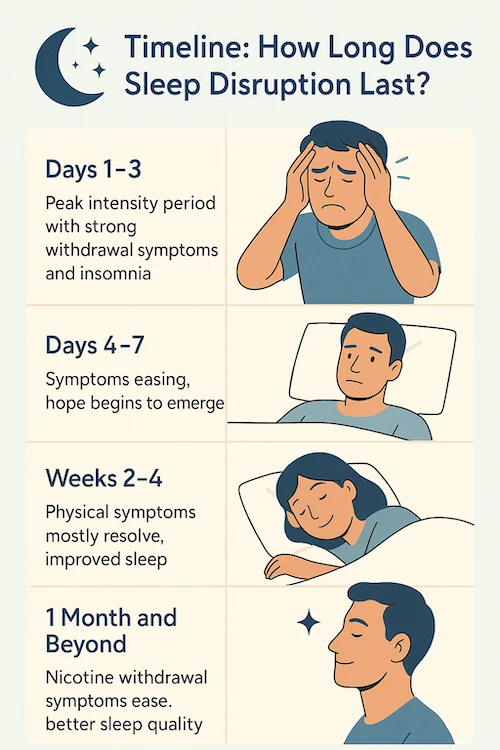
- Days 1-3: This is the peak intensity period. You’ll experience the strongest withdrawal symptoms, including intense cravings and the most severe sleep issues. Your insomnia will likely be at its worst during these initial days. I always tell my clients to be extra gentle with themselves during this phase – you’re doing something complicated and brave. Interestingly, I’ve also seen that with just one session, many of my clients feel a “rewiring” of their brain. For some, cravings simply stop, almost as if the mind has reset itself, and the grip of nicotine is released far quicker than expected.
- Days 4-7: Hope begins to emerge as symptoms ease and your body adapts. Sleep and energy levels gradually improve, though you may experience significant disruptions. This is when many people feel glimpses of improvements for their future.
- Weeks 2-4: The physical symptoms mostly resolve during this period. Most patients see significant improvement in insomnia after two weeks of completely stopping nicotine. Your sleep architecture begins to stabilise, and you’ll likely notice more extended periods of uninterrupted rest.
- 1 Month and Beyond: Here’s where the magic happens. Even people who have been smoking for decades will see nicotine withdrawal symptoms, including sleep problems, ease within about a month. Many former smokers discover that their sleep quality is superior to when they were smoking.
The encouraging reality I share with all my clients is that withdrawal symptoms disappear completely after two to four weeks for most people. Once your body fully adjusts, you’ll no longer have nicotine artificially disrupting your natural sleep cycles. Your nights will become peaceful again – and often more restorative than in years.
Practical Strategies to Manage Insomnia While Quitting
The key to success lies in having a comprehensive plan for managing sleep problems. If you’re unsure where to start, take a moment to explore therapy options that support both smoking cessation and better sleep.
Research confirms what I see in practice: early sleep issues can predict relapse risk, so I equip every client with multiple tools and strategies.
1. Choose the Right Quitting Method
Gradual Reduction vs. Cold Turkey: Some people find that gradually reducing cigarettes helps minimise withdrawal severity, while others prefer the decisive action of quitting cold turkey. The best quitting method is the one that suits your personality and circumstances. That said, in my experience, many people opt for the gradual approach to convince themselves they’re committed — but it often serves as a delay tactic, and they ultimately return to their usual smoking patterns.
Nicotine Replacement Therapy (NRT): NRT can significantly reduce withdrawal symptoms, including sleep disturbances. However, timing is crucial for optimal sleep:
- Remove nicotine patches before bed to avoid stimulation that can keep you awake.
- Use short-acting products like gum or lozenges during the day for cravings without affecting nighttime sleep.
- Consider combination therapy if recommended by your healthcare provider.
Prescription Medications: Options like Wellbutrin or Chantix may help with both quitting and managing withdrawal symptoms. Discuss with your healthcare provider to find the best option for your unique situation.
2. Sleep Hygiene and Evening Strategies
Since your sleep patterns are already disrupted, establishing robust sleep habits becomes crucial:
- Maintain a consistent sleep schedule: Go to bed and wake up at the same time daily, even on weekends. This helps retrain your circadian rhythm more quickly.
- Create a sleep sanctuary: Keep your bedroom cool (around 18-20°C), dark, and quiet. Consider blackout curtains and white noise if needed.
- Replace smoking rituals: This is perhaps the most critical psychological shift. Develop new bedtime routines that don’t involve cigarettes, possibly herbal tea, gentle stretching, or reading.
- Limit caffeine intake: Your body may be more sensitive during withdrawal, so reduce caffeine consumption, especially after 2 PM.
- Avoid screens before bedtime: Blue light can interfere with your already-disrupted sleep cycle. Try to power down devices at least an hour before bed.
3. Natural Remedies and Relaxation Techniques
As a hypnotherapist, I’m particularly passionate about these approaches because they work with your mind’s natural healing capacity:
Deep breathing exercises: When cravings or anxiety hit at bedtime, take slow, deep breaths while reminding yourself why you chose this healthier path. This activates your parasympathetic nervous system, naturally promoting relaxation. These techniques form the foundation of both hypnotherapy to stop smoking and insomnia hypnotherapy approaches.
Progressive muscle relaxation: Systematically tense and release each muscle group. This technique helps reduce physical tension that can interfere with sleep and gives your mind something constructive to focus on. Many practitioners now offer online hypnotherapy sessions that teach these valuable relaxation skills.
Regular moderate exercise: Physical activity during the day can help manage restlessness and improve sleep quality. However, avoid vigorous exercise within three hours of bedtime, as it can be stimulating.
Herbal teas: Chamomile, valerian root, or passionflower can promote relaxation without caffeine’s stimulating effects. Create a soothing ritual around preparing and drinking these teas.
Why the Temporary Sleep Issues Are Worth It
Even during the challenging first weeks, your body begins experiencing immediate health improvements that make the temporary sleep disruption worthwhile. Let me paint a picture of what’s happening inside you right now.
Short-term Benefits (Within Weeks)
- Within 8-12 hours, Carbon monoxide levels normalise, allowing your blood to carry oxygen more efficiently [3].
- Within 2 weeks, Circulation begins to improve dramatically, and lung function starts its remarkable recovery.
- Within 1 month, Coughing and shortness of breath decrease significantly as your respiratory system heals.
Long-term Health Improvements
The research is abundantly clear about the dramatic long-term benefits awaiting you:
- Significantly reduced risk of heart disease, stroke, and cancer.
- Improved lung function and reduced respiratory infections.
- Better circulation and immune system function.
- Enhanced sense of taste and smell, bringing new pleasure to daily experiences.
Sleep Quality Improvements
Here’s what excites me most as someone specialising in sleep and behavioral change: once your body adjusts, many former smokers discover their sleep quality is superior to when they were smoking. Smoking contributes to sleep apnea and other breathing-related sleep disorders, so quitting often leads to improvements in these conditions over time.
You’ll no longer have nicotine artificially disrupting your natural sleep cycles. Instead, you’ll experience the deep, restorative sleep your body was designed to enjoy. Many clients tell me their dreams become more pleasant, they wake feeling refreshed, and they have more consistent energy throughout the day.
When to Seek Professional Help
While some sleep disruption is entirely normal when quitting, specific symptoms warrant professional attention. As someone who has guided many people through this process, I want you to know when additional support might be beneficial:
- Severe insomnia lasting more than 4-6 weeks.
- Signs of depression or severe anxiety that interfere with daily functioning.
- Worsening sleep apnea symptoms or breathing difficulties.
- Complete inability to function during the day due to sleep deprivation.
Healthcare providers can offer additional cessation treatment options and support to ensure your quit attempt succeeds. Professional quitlines are available 24/7, and many communities provide smoking cessation programs specifically designed to help navigate challenges like sleep issues.
Don’t hesitate to reach out for help – having professional support significantly improves your chances of successfully quitting and managing withdrawal symptoms. There’s no shame in seeking guidance; it demonstrates wisdom and commitment to your success. Modern options like online hypnotherapy make it easier than ever to access specialised support for both smoking cessation and sleep issues from the comfort of your own home.
Your Path to Better Sleep and a Smoke-Free Life
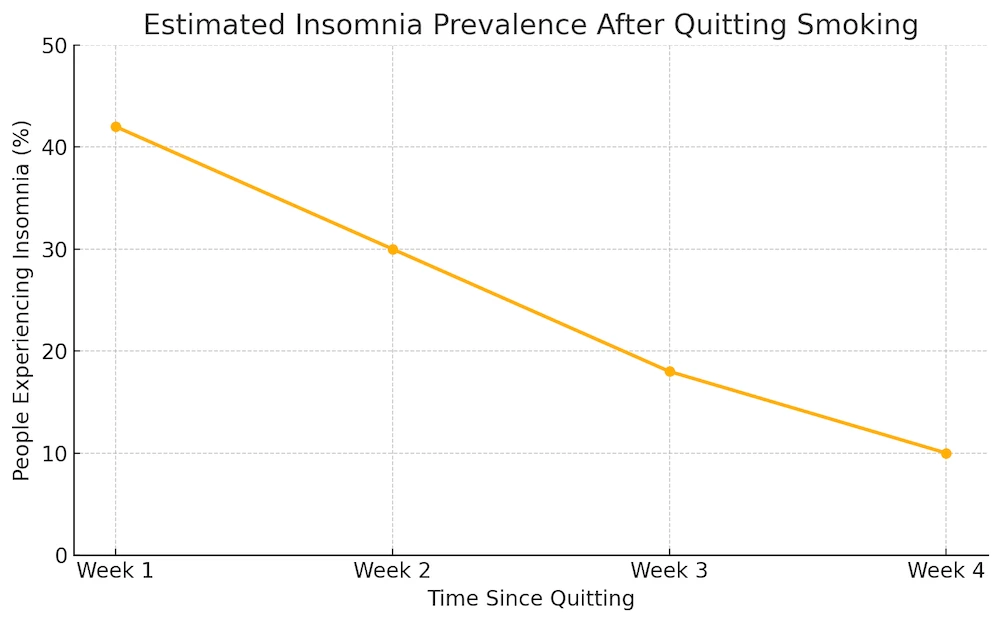
Experiencing insomnia when quitting smoking affects up to 42% of people, so you’re in excellent company. The research consistently shows that most people see significant improvement in sleep problems within 2-4 weeks, and the long-term benefits to your health and sleep quality are substantial.
You should remember that the sleep problems you’re experiencing are signs your body is healing and returning to its natural, healthy state. The timeline is predictable and hopeful: symptoms peak in the first few days and gradually subside over the following weeks. You can successfully navigate this temporary challenge with realistic expectations and the right strategies.
The path to becoming smoke-free isn’t always easy, but better sleep, along with dramatic improvements to your overall health, awaits on the other side. Many people begin feeling significantly better within just days to weeks due to improved circulation and reduced toxin levels.
Your smoke-free, well-rested future is worth every temporary challenge you’re facing now. Stay committed to your quit plan, use the strategies that resonate most with you, and remember that professional help is always available if you need additional support.
Trust in your body’s remarkable ability to heal. Trust in your decision to choose health. And trust that peaceful, restorative sleep is coming back to you, often better than it’s been in years. You’re not just quitting smoking; you’re reclaiming your natural right to deep, healing rest.
Regain Your Power Over Smoking with Hypnotherapy
We offer tailored hypnotherapy support for:
Resources
- NiQuitin. (2025). Feeling tired after quitting smoking? This is how to sleep better. NiQuitin. Retrieved from https://www.niquitin.co.uk/sleep-better-after-quitting-smoking/
- Patterson, F., Grandner, M. A., Malone, S. K., Rizzo, A., Davey, A., & Edwards, D. G. (2017). Sleep as a target for optimized response to smoking cessation treatment. Sleep Medicine Reviews, 35, 1-10. https://pmc.ncbi.nlm.nih.gov/articles/PMC6329404/
- National Health Service (NHS). (n.d.). Quit smoking. NHS. https://www.nhs.uk/better-health/quit-smoking/ (Accessed August 3, 2025)