
Hypnotherapy for Insomnia
Support for reclaiming natural sleep

Darren – Clinical Hypnotherapist
Are sleepless nights leaving you exhausted, frustrated, and stuck in a cycle of fatigue?
Insomnia is often rooted in stress, anxiety, or mental and emotional patterns that keep your mind racing long after bedtime.
Hypnotherapy for insomnia is a gentle, drug-free approach that works with the subconscious to support healthier sleep patterns over time.
Research estimates that insomnia affects about 16 % of adults worldwide, with more than 850 million people experiencing sleep difficulties.
Hypnotherapy is a therapeutic practice that uses guided relaxation and focused attention to access the subconscious mind, where habits, fears, and sleep-disrupting thoughts reside. Unlike stage hypnosis (which prioritises entertainment), clinical hypnotherapy is a collaborative therapeutic process.
Together, we’ll explore the factors contributing to your sleeplessness, such as stress or racing thoughts, and work toward creating calmer, more supportive sleep patterns.
Qualifications & Experience
- AIM Award Hypnotherapy & Counselling Skills
- Hypno – Gastric Band Registered Practitioner
- CPD Hypnotherapy Regression Masterclass
- Smoking Cessation Practitioner (HSOH)
- Anxiety CPD
- Depression CPD
- Hypno Anti-Depressant
Pricing Options To Suit Your Journey
Pay As You Go
- ✔ Consultation (60 minutes): £85. Explore your needs, goals, and challenges in a focused session to create a tailored plan.
- ✔ Single Hypnotherapy Session: £110
3-Session Package
- ✔ 3 tailored hypnotherapy sessions for your insomnia.
- ✔ 5 bonus recordings to support your progress between sessions (worth £495).
- ✔ A personalised approach to address your unique goals.
4-Session Package
- ✔ 4 tailored hypnotherapy sessions for deeper lasting results.
- ✔ 5 bonus recordings to reinforce long-term progress and confidence (worth £495).
- ✔ Tools and techniques designed specifically for your goals and challenges.
Make Payment Here
Suffering From Sleeplessness?
- Difficulty falling asleep despite feeling tired?
- Waking up too early and unable to return to sleep?
- Daytime sleepiness or fatigue even after a full night’s sleep?
- Poor concentration and focus during the day?
- Difficulty with memory and decision-making?
- Increased errors or accidents due to impaired alertness?

How Hypnotherapy May Support Insomnia
Hypnotherapy for insomnia focuses on calming the mind and addressing patterns that can keep the body in a state of alertness at night. It works with relaxation and focused attention to help reduce sleep-related anxiety and encourage more settled sleep patterns over time.
How this approach is often used for sleep difficulties
- May help address anxiety or unhelpful sleep associations.
- Encourages relaxation and a calmer nervous system before sleep.
- Can be used alongside approaches such as CBT-I or sleep hygiene.
What Happens During Hypnotherapy Sessions?
Hypnotherapy sessions for insomnia focus on helping the mind and body move out of a state of alertness and into a calmer, more settled state that supports sleep.
Working with sleep-related anxiety
For many people, anxiety about not sleeping becomes part of the problem. Hypnotherapy can help address this pattern by reducing mental tension around bedtime.
Encouraging relaxation before sleep
Sessions often involve guided relaxation and gentle imagery designed to help settle racing thoughts and prepare the body for rest.
Developing supportive sleep habits
Sessions may also involve identifying triggers that disrupt sleep and learning simple techniques, including self-hypnosis, to support relaxation between sessions.
What to Expect From Hypnotherapy for Insomnia
If you’re considering hypnotherapy for insomnia, it’s natural to want to understand what sessions involve and how the process works in practice. Sessions are calm, structured, and focused on helping you feel safe, supported, and in control throughout.
Hypnotherapy does not involve being unconscious or losing awareness. You remain awake and able to engage at all times, with sessions guided at a pace that feels comfortable for you.
Initial Consultation
The first session usually begins with a relaxed conversation about your sleep difficulties, daily routines, and any patterns you’ve noticed around bedtime or nighttime waking. This helps build an understanding of what may be contributing to your insomnia and whether hypnotherapy is a suitable approach for you.
Hypnotherapy Sessions
During hypnotherapy sessions, guided relaxation techniques are used to help settle the mind and reduce mental alertness associated with poor sleep. This relaxed state allows attention to shift away from racing thoughts and toward calmer, more supportive sleep patterns.
Between Sessions
Many people are shown simple techniques they can practise between sessions, such as relaxation exercises or self-hypnosis, to support progress at home. These tools are designed to be gentle and easy to use, helping reinforce a calmer approach to sleep without effort or pressure. I also offer recordings of sessions that you can use to practise between appointments.
How Many Sessions Are Needed?
While every case is unique, most clients achieve lasting results in 3 sessions based on my decade of clinical experience. Here’s why:
- Session 1: Identify triggers, reduce bedtime anxiety, and initiate subconscious rewiring.
- Session 2: Strengthen new sleep associations and address waking disruptions
- Session 3: Lock in long-term habits (e.g., falling asleep faster, staying asleep through the night).
There is no fixed commitment, progress is reviewed as you go, allowing you to decide what feels appropriate for you.

What The Research Says
Sleep hypnosis is a therapeutic treatment that uses guided relaxation, focused attention, and positive suggestions to help individuals achieve a restful state and improve sleep quality.
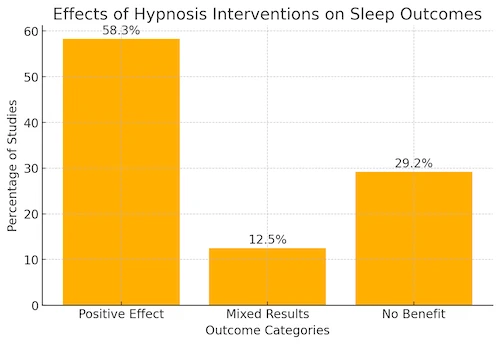
A study showed that out of 24 included studies, more than half (58.3%) reported a positive effect of hypnosis interventions on sleep outcomes over time. Additionally, 12.5% of the studies demonstrated mixed results, with improvements in some sleep outcomes but not in all. [Source]
Frequently Asked Questions about Anxiety & Treaments
Q1. What is the root cause of insomnia?
Insomnia often stems from psychiatric conditions like depression, anxiety, and stress, where disrupted sleep is both a symptom and a contributor. People who struggle with stress or have heightened anxiety are more prone to chronic insomnia, often experiencing light, restless sleep. This creates a cycle where poor sleep worsens mental health, making it essential to address these underlying issues for effective insomnia management.
Q2. Can insomnia lead to depression?
Q3. I am not sure I have insomnia, but it take me a while to fall asleep. Can hypnosis help with this?
While this might not classify as full insomnia, reducing the time it takes to fall asleep is still beneficial. Hypnosis can be especially effective for this, as it induces a trance-like relaxation similar to when you’re deeply absorbed in listening or watching something. Based on research and personal experience [source], hypnosis is particularly effective at shortening sleep latency.
Q4. Can hypnotherapy for insomnia help with other health issues, like stress?
Hypnotherapy can help reduce anxiety and stress, which are major contributors to insomnia. Depending on your situation, treatment may also directly address underlying psychiatric conditions to improve insomnia. This approach can lead to better sleep patterns and improvement in mental health.